My Life
This content is not for someone who is in pajamas and who grabs the popcorn while watching the series Friends or a person who scrolls influencers fashion reels on Instagram. If you’re looking for something positive, you’re welcome to leave the page. In my opinion, the idea that influencers encourage us to embrace positivity is both unrealistic and delusional.
When we are happy and don’t know how it feels to be frustrated, we wouldn’t know the in-depth pain. Nevertheless, we get into the depth of the ocean as others had gone through; there are possibilities that we have a chance to experience what that shit was.
If we’re lucky, we wouldn’t want to be seen or understood, valued, appreciated, and most importantly, loved. It’s the most subtle way in which we master and regulate our emotions.
It’s really hard to master those emotions; we might not be able to do it initially, but once we’ve mastered it, there will be a possibility where we wouldn’t have to look for happiness from outside but from our own self, which paves the way to rebel against the conformities of society.
I purchase a new bag since it is worn out, even though I’m comfortable with the bag I already have. I never wanted to purchase jewelry, yet I’m forced to put it on. I will have to put on clothes that I don’t like, and if I don’t have an option to purchase, I badly want to do waxing since I feel uncomfortable around people once I leave my home, which is also a strategy for marketing the products of the waxing kit. I’m willing to take loans in order to purchase that; it takes me to that extent. Unless I desire it, I don’t want to acquire anything.
Maybe the moment I get the courage to live life on my own terms, I’ll be happy.
The habits or the routine that I’ve mentioned above could be trivial, yet those are part of life. It can be compared to the butterfly tornado effect, which signifies how a trivial change could create a huge impact and differences that are not predictable.

I wish I would get the courage to live the life I want, without complying with any of those rules.
I’m supposed to earn money for the things that I don’t really want (inspired by the movie “Fight Club”). So, I expect to raise my standard, not because I truly desire it, but to attain the status and to belong in that pathetic crowd!!!!!!!!!
How cruel it is to not be able to live in a way my heart desires. At the end, life gets turned into a dystopian novel that never had a happy ending.
Is there anywhere we could run from this!!
where I could thrive, not survive, and where I live in the moment to explore but not to impress!!!
At the end of the day, no matter what, I’ll have to vote for Money!!! and the angst that comes along!!!!!!!
This thought of being driven into the shithole of materialism induces violence amongst people.
Some desire money, some desire women, and some are obsessed with land, which instigates war. We’ve exploited almost every natural resource that existed, like fuel, oil, water, trees, and animals. We divide among ourselves in the name of religion, caste, language, and nationality. Obsession and desire are the two most crucial root causes of war. When will this stop? Maybe the day humans stop wanting!!

Materialism and Its Cost: A Wake-Up Call from Nature’s Exhaustion
In a world increasingly driven by consumerism, the demand for more—more clothes, more furniture, more land, more luxury—comes at a steep cost. Materialism, often masked as progress, has turned nature into a warehouse of disposable goods. Here’s how our hunger for consumption is exhausting the planet:
- Water (Seas): Polluted by Production and Plastics
The fashion and manufacturing industries guzzle massive amounts of freshwater and discharge toxic chemicals into rivers and seas. Dyes, microplastics, and untreated wastewaters end up in oceans, destroying marine life and altering ecosystems. Overconsumption means more production, more pollution, and less clean water—a cruel irony when water scarcity threatens millions.
- Wood (Trees): Forests Felled for Lifestyle
Trees are felled at alarming rates to satisfy our desire for furniture, packaging, and fast construction. Forests, which act as the lungs of the Earth, are being razed to meet demand. The result? Climate imbalance, extinction of species, and indigenous displacement. A table or a paper bag may seem harmless, but when multiplied by billions of consumers, the damage is irreversible.
- Land (Soil & Waste): Dumping Grounds for Decay
Every product we consume leaves behind waste—non-biodegradable packaging, broken electronics, spoiled goods. Fertile soil is suffocating under heaps of landfill. Arable land, once used to grow food, is now reserved for waste disposal and monoculture crops to fuel industries. Soil loses life. Land becomes sterile. Nature becomes a casualty.
- Animals (Leather): Lives Traded for Luxury
From leather handbags to fur-trimmed jackets, animals are commodified to fuel fashion and status. The leather industry alone kills millions of animals annually and contributes heavily to water and air pollution through tanning chemicals. These lives lost often represent not need, but vanity—a testament to the cruel underbelly of materialistic desire.
- Clothes Dumped in Africa: A Global Shame
Fast fashion’s final graveyard lies in the Global South. Tons of used clothes, largely from wealthy nations, are dumped in African countries like Ghana and Kenya. These synthetic garments, often unsold or discarded after minimal use, do not decompose. They choke waterways, contaminate soil, and decimate local textile economies. The West wears once and discards; the South bears the rot.
Conclusion: The Illusion of Abundance
Materialism convinces us that happiness lies in having more. But the planet’s resources are finite, and our overconsumption is silently orchestrating collapse—of ecosystems, of biodiversity, and of equity. Real progress lies not in accumulation but in mindful consumption, respect for nature, and responsibility for what we take.
It’s not about guilt—it’s about awareness. Because every choice we make echoes in the sea, the soil, the sky, and the lives we share this Earth with.
Being an outsider
Oh, the shiny trap of materialism — how brilliantly it deceives us, flashing promises of happiness with every new gadget, handbag, or overpriced coffee table. We’ve been sold a lie. A glossy, Instagram-filtered, dopamine-hitting lie that convinces us our worth is tied to the stuff we own. So we chase it. And in chasing it, we sign our lives away — on monthly EMIs, on zero-interest credit cards, on loans that bury us deeper than any luxury mattress ever could comfort us. It’s ridiculous, really. We work jobs we hate, to earn money we don’t keep, to buy things we don’t need, to impress people who don’t even care. And then we call it success?- inspired from the movie “Fight Club”.
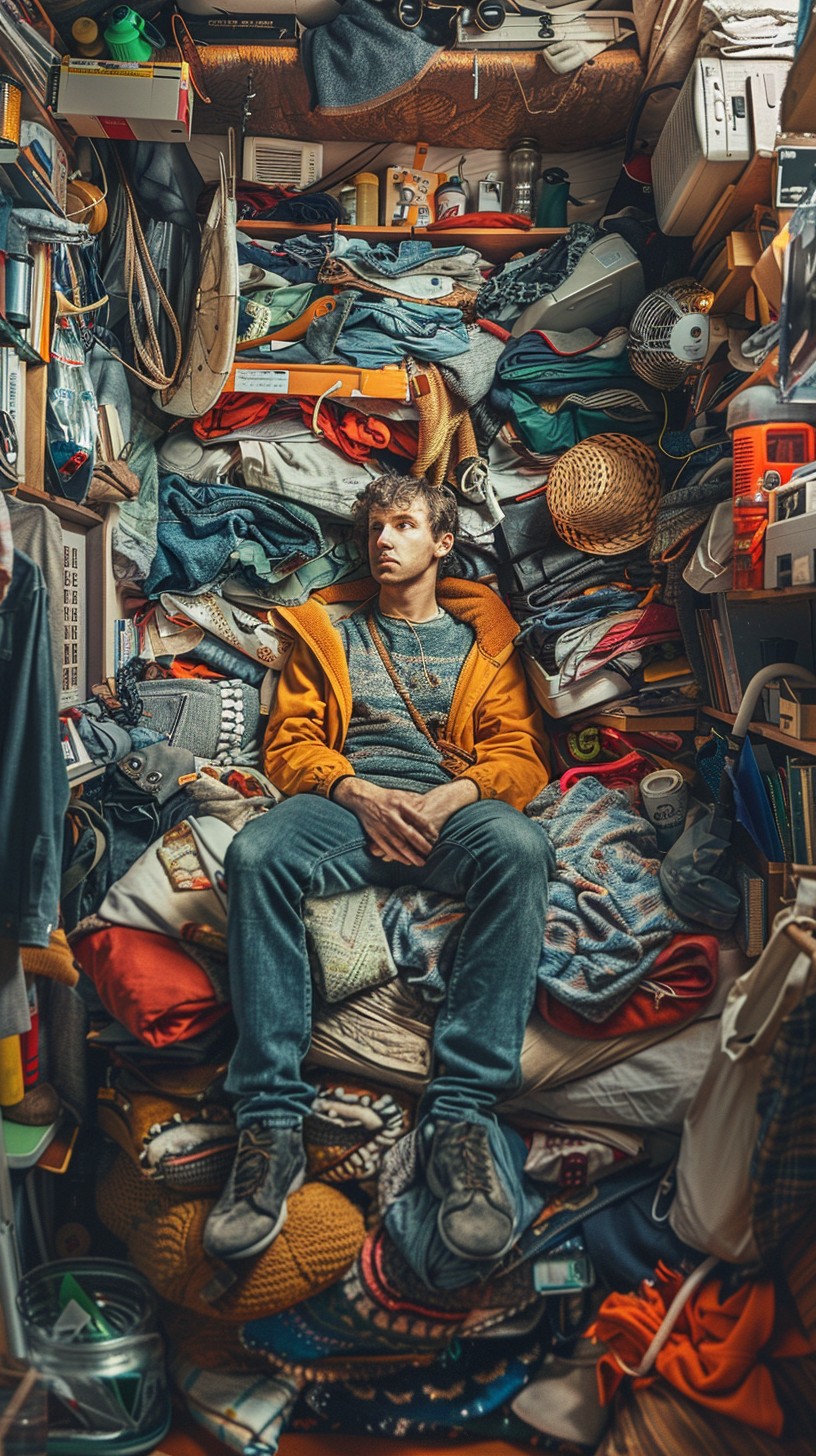
How many of us have drawers full of unused tech? Closets crammed with fashion “essentials” that still have tags on them? Subscriptions we forgot to cancel because the endless treadmill of “you need this to be enough” never lets us rest? Meanwhile, our anxiety spikes every time our bank app notifies us of “low balance.” But sure — let’s go buy that new iPhone, because God forbid someone sees us using a phone that’s more than two years old.
We’re drowning in debt — not because we’re lazy, but because we’re constantly told our joy is a purchase away. Need therapy? Nah, just go on a shopping spree. Feeling down? Retail therapy! Need validation? Post that haul video! This system thrives on our insecurity and debt. It needs us broke. It wants us distracted. And it wins every time we swipe a card to fill a void that can’t be bought away.

Wake up. Wealth isn’t in the things — it’s in time, peace, freedom. Debt isn’t a badge of honor. And stuff? Stuff is just stuff.